
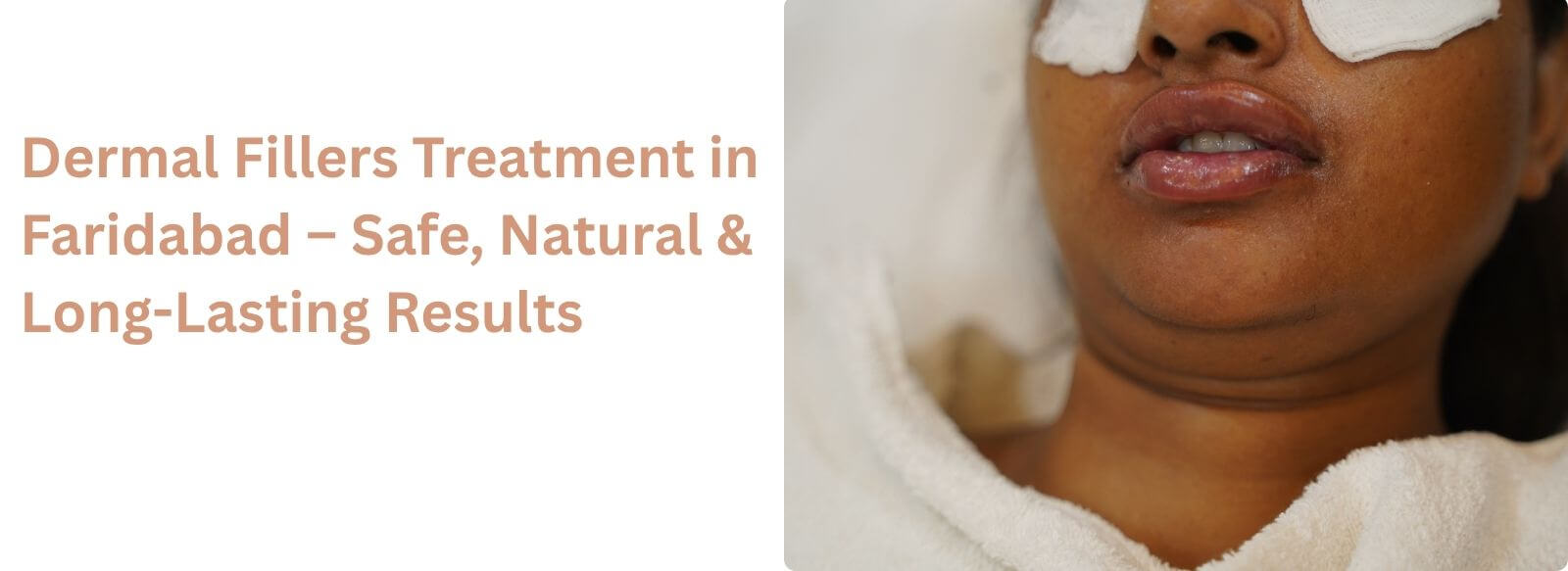
Dermal Fillers Treatment in Faridabad – Safe, Natural & Long-Lasting Results
Many people consider dermal fillers but hesitate because they fear an artificial appearance. They often associate fillers with overfilled cheeks, frozen expressions, or unnatural facial changes. But in reality, properly planned filler treatment is about restoring facial balance, not changing your identity. The goal is to replace lost volume, soften visible ageing signs, and maintain natural facial movement.
Filler treatment in Faridabad has become a preferred choice for people looking for non-surgical facial rejuvenation. However, the quality of results depends on more than the filler product itself. Facial anatomy knowledge, correct injection technique, and personalised treatment planning play a major role in achieving safe outcomes.
What Are Dermal Fillers?
Dermal fillers are minimally invasive injectable implants used to restore facial volume, smooth static wrinkles, and improve facial contours. Unlike Botox, which works by relaxing specific muscles responsible for expression lines, fillers act as physical volumizers that restore support beneath the skin.
Aging affects the face in multiple ways. Collagen production reduces, skin elasticity changes, and natural fat compartments lose volume. Because of these changes, areas like cheeks, lips, under-eyes, and jawlines may appear less defined over time.
Dermal fillers address these concerns by adding controlled volume beneath the skin. Since different facial areas require different levels of support, the filler type and injection depth must be selected carefully.
Why Do People Choose Dermal Fillers?
Facial aging is not only about wrinkles. Volume loss often creates a tired or aged appearance. For example, reduced cheek volume can make the mid-face look flatter, while loss of lip volume can affect facial proportion. Dermal fillers may help improve:
- Hollow cheeks caused by volume loss
- Under-eye hollowness or tear trough appearance
- Nasolabial folds and smile lines
- Thin or uneven lips
- Less defined chin and jawline
- Depressed acne scars
The purpose is controlled correction. Excessive filler placement can disturb facial harmony, which is why assessment before treatment is important.
How Do Dermal Fillers Work?
Dermal fillers are placed into specific anatomical layers depending on the concern being treated. The depth of injection directly affects the final appearance and safety of the procedure. For example, superficial lines require softer fillers placed closer to the skin surface. Structural areas like cheeks or chin usually need firmer fillers placed deeper to provide support.
Doctors generally work with three injection levels:
| Injection Layer | Purpose |
| Superficial dermis | Treats fine lines and delicate wrinkles |
| Subcutaneous layer | Restores soft tissue volume |
| Supraperiosteal layer (above bone) | Provides structural lifting for cheeks, chin, and jawline |
Since facial structures vary from person to person, a customised approach gives more natural-looking results.
Types of Dermal Fillers Used in Treatment
Different filler materials are selected based on longevity, treatment area, and desired correction.
Hyaluronic Acid Fillers
Hyaluronic Acid (HA) fillers are the most commonly used temporary fillers. HA is naturally present in human connective tissue and has the ability to attract water, which helps provide hydration and volume.
Because HA fillers can be dissolved with hyaluronidase (an enzyme that breaks down hyaluronic acid), they are considered a flexible option for many facial treatments.
They are commonly used for:
- Lip enhancement
- Cheek restoration
- Tear trough correction
- Fine wrinkle treatment
HA fillers are modified through cross-linking, which helps them maintain structure after injection and prevents rapid breakdown.
Calcium Hydroxylapatite Fillers
Calcium Hydroxylapatite (CaHA) fillers provide immediate volume and also encourage collagen production through neocollagenesis (new collagen formation). These fillers generally last around 12 to 18 months. They are commonly considered for deeper facial volume correction.
Poly-L-Lactic Acid Fillers
Poly-L-Lactic Acid (PLLA) works differently from traditional fillers. It does not create immediate volume.
Instead, it stimulates gradual collagen production within deeper skin layers. The improvement develops slowly as collagen formation increases.
PMMA Fillers
Polymethylmethacrylate (PMMA) fillers are permanent fillers used for specific correction purposes. Since they remain in the body permanently, careful patient selection is required due to the possibility of delayed inflammatory reactions.
How Are Fillers Planned for Natural Results?
A common concern among patients is looking “filled” after treatment. This usually happens when filler placement does not consider facial proportions.
Natural results require understanding:
- Facial bone structure
- Existing volume loss
- Skin quality
- Desired improvement
- Appropriate filler quantity
By the way, fillers are not simply injected into wrinkles. The problem is often deeper. Age-related changes usually involve loss of support beneath the skin. Restoring that support can create a fresher appearance while keeping facial expressions natural.
Why Choose One Skin Clinic for Fillers Treatment in Faridabad?
Choosing the right clinic is important because filler treatments require medical understanding, not only cosmetic skills. Since facial blood vessels and nerves have complex patterns, proper injection techniques help reduce risks.
At One Skin Clinic, treatment begins with facial assessment and discussion of your concerns. The recommended filler type, quantity, and placement are selected according to your facial requirements.
An expert fillers specialist in Faridabad focuses on creating balanced results rather than simply adding volume.
Are Dermal Fillers Safe?
Dermal fillers are generally safe when performed by trained dermatologists using appropriate techniques. Like any medical procedure, they can have temporary effects after injection.
Common short-term reactions include:
- Mild swelling
- Redness
- Bruising
- Tenderness
These effects usually reduce as the treated area settles.
Rare complications may occur if filler affects a blood vessel. Vascular occlusion (blocked blood supply due to filler) is one of the most serious concerns because it can affect tissue health if not managed quickly.
Other uncommon complications include delayed inflammatory nodules and the Tyndall effect (bluish skin appearance caused by superficial HA placement). This is why selecting an experienced doctor matters.
What is the Filler Treatment Cost in Faridabad?
The filler treatment cost in Faridabad is different for every patient because treatment requirements vary.
The cost depends on:
- Type of filler selected
- Number of syringes required
- Treatment area
- Amount of correction needed
- Doctor’s expertise
A consultation helps determine the exact requirement. Two patients with similar concerns may need different filler amounts because facial structure and volume loss patterns are not identical.
How Long Do Dermal Fillers Last?
The duration of filler results depends on several factors, including filler type, treatment area, metabolism, and injection technique.
Hyaluronic acid fillers may last several months to more than a year depending on placement and product characteristics. Biostimulatory fillers may continue supporting collagen production for longer periods.
Regular follow-up helps maintain balanced results over time.
Book Your Consultation for Fillers Treatment in Faridabad
Dermal fillers work best when they are planned according to your facial structure and aesthetic goals. The aim should always be natural correction with proper medical guidance.
At One Skin Clinic under Dr. Khushboo Jha (MD and dermatologist), we provide personalised filler consultations based on your concerns and facial assessment. If you are considering fillers in Faridabad, consult our dermatology team to understand the suitable treatment option for your skin and facial needs.